taschurkova
26.03.2022 19:14

1. What is demand?
А) Demand is one of the most fundamental concepts of economics and it is the backbone of a market economy.
B) Demand refers to how much (quantity) of a product or service is desired by buyers.
С) In market economy theories, demand and supply theory will allocate resources in the most efficient way possible.
D) The correlation between price and how much of a good or service is supplied to the market is known as the supply relationship.
E) The relationship between price and quantity demanded is known as the demand relationship.
2. What is the balance of trade?
A) Trade happens because people need or want things that they don't have.
B) They earn money from these sales and then can buy the things that they themselves need and cannot produce on their own.
C) The difference between what a country exports and what it imports is called the balance of trade.
D) Even though many nations have a lot of different goods to export there are countries that depend only on one or two products to get money.
E) The biggest exporting nations are The United States, France, Germany, the United Kingdom, Canada and Japan.
3. What does government forbid?
A) In some countries the government controls all trade and in others it allows companies and firms to trade freely.
B) Governments pass laws to prevent companies from becoming too strong and powerful and from controlling the market.
C) Many governments try to help their own industries by making it more difficult to import foreign products.
D) Sometimes a government forbids companies to buy or sell dangerous or illegal products, or military technology.
E) A government may also limit the number of products that it will buy from another nation.

4. What is the basic idea of international trade?

A) The main difference between domestic and international trade is the use of foreign currencies to pay for the goods and services crossing international borders.
B) The basic idea of international trade is simple – each country produces goods or services that can be either consumed at home or exported to other countries.
C) Whenever a country imports or exports goods and services, there is a resulting flow of funds: money returns to the exporting nation and money flows out of the importing nation.
D) Trade and investment is a two-way street and with a minimum of trade barriers, international trade and investment usually makes everyone better off.
E) In an interlinked global economy, consumers are given the opportunity to buy the best products at the best prices.

5. What was the idea to make travel with gold less dangerous?

A) To make travelling with gold less dangerous, goldsmiths, or people who made jewelry and other items out of gold, came up with an idea.
B) These promissory notes were the beginning of paper money in Europe.
C) If you look at a British bank note today, you'll see it still says: I promise to pay the bearer on demand the sum of twenty pounds.
D) Paper money was adopted in Europe much later than in Asia and the Arab world - primarily because Europe didn't have paper.
E) The goldsmiths started writing out notes on pieces of paper that said the person who had the note could trade the note in for gold.

6. What does branding mean?

A) Brands have been used as marks of identification at some time in all countries and civilizations.
B) For over 4,000 years, brands have been used for identification on both livestock and humans.
C) This was an early commercial explanation of what we now know as branding.
D) Around 1900, James Walter Thompson published a house ad explaining trademark advertising
E) This began the practice we now know as ―branding‖ today, where the consumers buy ―the brand instead of the product.

7. What is franchising?

A) Many hotel, motel, gas station, and fast-food chains are franchises
B) Franchising is another form of business - often between a big firm and a sole proprietor.
C) A big firm may decide that it wants to expand without investing large amounts of capital.
D) The franchiser must be very careful in selecting franchisees.
E) A few people are finally chosen who have the necessary capital and the right qualities.

8. What industries must protect public health?

A) Supermarkets buy food in such large quantities that often they can sell it for less money than the small privately owned grocery stores.
B) Many stores offer trading stamps, which may be exchanged for merchandise.
C) Food and drug laws regulate the purity of foods and the way they are handled and labeled.
D) The purpose of these laws is to make certain that the public will have good, safe, unadulterated food that is not misrepresented in any way.
E) To safeguard the public health, the governments and food industries of many countries have set up strict controls over the processing and grading of all kinds of food.


Нажмите на рекламу ниже и сразу увидите ответ
Популярные вопросы:
Ответ:
мозк2
23.06.2020 06:54
1) Mary entered the University last year.
Did Mary enter the University last year?
When did Mary enter the University?
Mary entered the University last year, didn't she?
Did Mary enter the University or the college last year?

2) The man domesticated the dog many years ago.
Did the man domesticate the dog many years ago?
When did the man domesticate the dog?
The man domesticated the dog many years ago, didn't he?
Did the man domesticate the dog or the cat many years ago?

3) My parents left for Paris last Thursday.
Did your parents leave for Paris last Thursday?
Where did your parents leave for last Thursday?
Your parents left for Paris last Thursday, didn't they?
 Did your parents leave for Paris or for London last Thursday?

4) The pupils of our class raked all the leaves near the school last autumn.
Did the pupils of our class rake all the leaves near the school last autumn?
Who raked all the leaves near the school last autumn?
The pupils of our class didn't rake all the leaves last autumn, did they?
Did the pupils of our class rake all the leaves last autumn or last spring?

5) We watered the flowers two days ago.
Did we water the flowers two days ago?
When did we water the flowers?
We watered the flowers two days ago, didn't we?
Did we water the flowers two or four days ago?

6) Bob promised to give up smoking two months ago.
Did Bob promise to give up smoking two months ago?
What did Bob promise two months ago?
Bob promised to give up smoking two months ago, didn't he?
Did Bob or Peter promise to give up smoking two months ago?

7) In the summer Peter played tennis twice a week.
Did Peter play tennis twice a week in the summer?
How many times a week did Peter play tennis in the summer?
Peter played tennis twice a week in the summer, didn't he?
Did Peter play tennis or football twice a week in the summer?

8) The policeman stopped Harry on his way home last night.
Did the policeman stop Harry on his way home last night?
Whom did the policeman stop  last night?
The policeman stopped Harry on his way home last night, didn't he?
Did the policeman stop Harry or John on his way home last night?

9) We invited them to the party last week.
Did we invite them to the party last week?
Where did we invite them last week?
We invited them to the party last week, didn't we?
Did we invite them to the party last week or month?

10) He took the book from the library yesterday.
Did he take the book from the library yesterday?
When did he take the book from the library?
He took the book from the library yesterday, didn't he?
Did he take the book or a journal from the library yesterday?

11) That boy broke my window last night.
Did that boy break your window last night?
When did that boy break your window?
That boy broke your window last night, didn't he?
Did that boy break your window last night or last week?

12) Ann met me at the airport an hour ago.
Did Ann meet you at the airport an hour ago?
Who met you at the airport an hour ago?
Ann met you at the airport an hour ago, didn't she?
 Did Ann or Peter meet you at the airport an hour ago?
0,0(0 оценок)
Ответ:
il1234561
13.01.2021 03:15
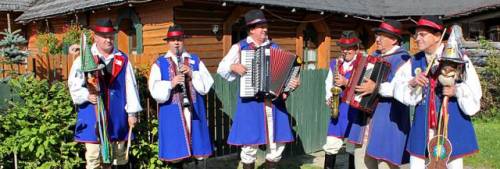
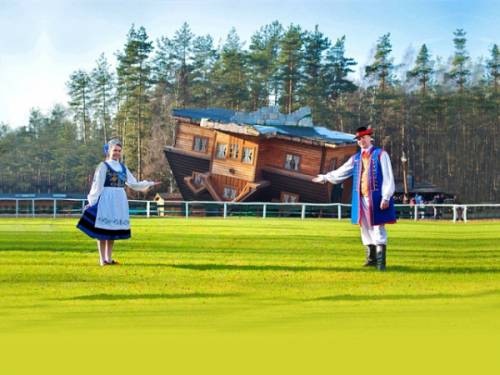
Kashuba is West Slavic ethnic group living in the North-West of Poland.The capital city is Kartuzy. Previously, the main occupation of the majority Kashubian was fishing; now most of the work is in the sphere of tourism.
Kashubian-Pomeranian Union is an organization that cares about preserving the traditions of Kashubians. They are direct descendants of the ancient Slavic tribe of Pomorian. Their ancestors came to the area between the rivers Oder and Vistula during the great migration of peoples. 
The oldest reference to their name comes from the thirteenth century (print Duke Barnim I Pomeranian), then Kashuba owned land around Szczecin. According to Westphalia Peace of 1648, after the end of the Thirty years war, the Western part of Pomerania was Swedish and Swedish kings have added a title of "Duke Kashubia" from 1648 to 1720. 
Because of the difficult economic situation in Kashubia Kashubians went to Westphalia and other  regions of Germany, and also in the USA and Canada. In 1860 kasubai village was founded Wilno in the canadian province of Ontario, the inhabitants of which saved Kashubian traditions and even their native language. A small group of Kashubians also lived in Australia and New Zealand. 
 J. Perkowski engaged the study of the Kashubian language and folklore in America, he noted that dialectal features also mixing features of English and Polish languages.
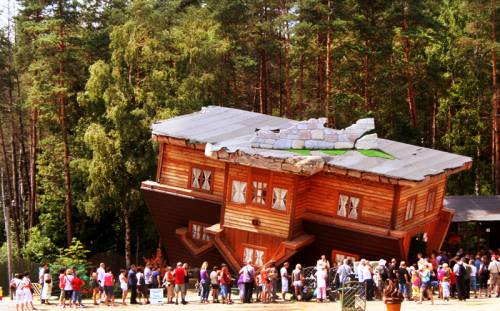
Написать про мало кому знакомую достопремечательность
0,0(0 оценок)
Полный доступ
Позволит учиться лучше и быстрее. Неограниченный доступ к базе и ответам от экспертов и ai-bota Оформи подписку
logo
Начни делиться знаниями
Вход Регистрация
Что ты хочешь узнать?
Спроси ai-бота