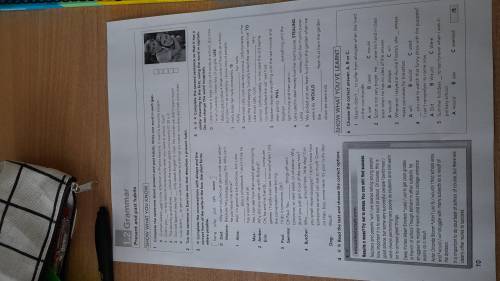
1. some - предложение утвердительное 2. any - предложение вопросительное 3. no - этого требует контекст(т.е. чисто логически у человека не должно быть денег, чтобы он не имел возможности их дать) и any, т.к. это отрицание 4. any - предложение вопросительное 5. any в значении "какой-нибудь, любой" 6. any - -//- 7. some - предложение утвердительное, слово в значении "некоторые" 8. some -//- 9. some - предложение утвердительное 10. no - устойчивое выражение "to have(got) no idea", что значит "не иметь понятия" 11. no/some (без понятия, что именно там нужно ставить, т.к. нужен хоть какой-то контекст) 12. no - противопоставление(but)
1. They are factors that affect prices of goods and services and also resources necessary to produce them. Economists are also interested in sellers' and buyers' behaviour in the market, in the relationship between "price system" and "market mechanism". 2. Microeconomics, macroeconomics, and development economics. 3. Money economics, international economics, labour economics, industrial economics, agricultural economics, growth economics, mathematical economics. 4. A model often helps an economist to make correct predictions. The economist usually follows several rules when he makes a model of economic behaviour. 5. Real life is complex and it is not possible for an economist to include alt the details in a model. 6. A model usually includes only essential elements and relationships of a particular economic situation. 7. If an economist has two different models of one phenomenon, he always chooses the model that predicts the results of a particular phenomenon more accurately. 8. It is not enough to make models, it is also necessary to collect and study actual data in order to know how accurate a model is.
0,0(0 оценок)
Полный доступ
Позволит учиться лучше и быстрее. Неограниченный доступ к базе и ответам от экспертов и ai-bota
Оформи подписку